



2025 Leading Research Achievements

We are pleased to present you with the 2025 Leading Research Achievements by BBRF Grantees, Prize Winners & Scientific Council Members. They are presented in the order of their publication in scientific journals.
Proof-of-Concept Test for an RNA-Based Therapy to Prevent Effects of a Devastating Autism-Related Gene Mutation
Next-Generation Therapies: Autism, Schizophrenia, Neurodevelopmental Disorders

- Marta Biagioli, Ph.D., University of Trento, Italy; 2015 BBRF Young Investigator
Researchers reported progress in developing an RNA-based therapy to treat neurodevelopmental disorders, including some autism spectrum disorders (ASDs). They synthesized a long non-coding RNA (lncRNA) molecule designed to bind to a messenger RNA for the gene CHD8, with the effect of increasing production of the CHD8 protein. This is a way of addressing an insufficiency of that protein in neurons of people with a devastating CHD8 gene mutation that disables one copy of the gene and can lead to macrocephaly, or enlarged head size, in a subset of people with ASDs. Dr. Biagioli noted possible implications of such RNA-based therapies beyond the CHD8 syndrome and ASD, with potential impact “for a large repertory of currently incurable neurologic conditions caused by reduced levels of target protein[s].” Read more.
The research team included Christelle Golzio, Ph.D., 2013 BBRF Young Investigator.
Molecular Therapy, March 5, 2025
Loss of Pleasure From High-Fat Food That Paradoxically Supports Obesity Is Traced to a Brain Signaling Pathway Involving Neurotensin
Basic Research, Next-Generation Therapies: Eating Disorders


- Stephan Lammel, Ph.D., University of California, Berkeley; 2015 BBRF Young Investigator
- Neta Gazit Shimoni, Ph.D., University of California, Berkeley; 2021 BBRF Young Investigator
The new research helps explain a paradox: why individuals acclimated to high-fat food begin to get less pleasure from it yet continue to eat it and become obese. The team demonstrated that chronic consumption by mice of a high-fat diet alters hedonic feeding behaviors and disrupts signaling in the pathway connecting the lateral nucleus accumbens (NAc) and the ventral tegmental area (VTA). The disruption affects neurotensin, a signaling protein, and influences the progression of obesity. Further experiments showed that targeting neurotensin signaling in the NAc-VTA pathway may be a way to regulate food intake and support healthy weight maintenance—perhaps without disrupting other essential functions mediated by neurotensin, which include regulation of pain and body temperature. Read more.
Nature, March 26, 2025
Team Modifies LSD Molecule to Capture Potential Therapeutic Effects while Limiting Hallucinations
Next-Generation Therapies: Schizophrenia, Bipolar Disorder, Depression


- William A. Carlezon, Jr., Ph.D., Harvard Medical School / McLean Hospital; BBRF Scientific Council; 2007, 2005 BBRF Independent Investigator; 1999 BBRF Young Investigator
- Conor Liston, M.D., Ph.D., Weill Cornell Medicine; BBRF Scientific Council; 2013 BBRF Young Investigator
Three BBRF grantees were part of a team led by Dr. David E. Olson reporting that a slight modification of the LSD molecule produced a distinct drug, named JRT, which appears to have little or no hallucinogenic potential yet retains some of the potentially powerful pro-cognitive therapeutic impact of LSD and other hallucinogens, in addition to having potentially anti-depressant properties. These specific effects suggest that an optimized version of JRT or drugs with similar structural modifications may have the potential to address the negative and cognitive symptoms of schizophrenia, and more broadly, the team said, may be useful in “treating [other] illnesses unlikely to be addressed by psychedelics, including bipolar disorder and psychosis in neurodegenerative diseases.” Read more.
The research team included Alex S. Nord, Ph.D., 2015 BBRF Young Investigator.
Proceedings of the National Academy of Sciences (PNAS), April 14, 2025
Non-invasive Ultrasound Brain Modulation Therapy Shows Potential to Treat Mood, Anxiety, Trauma, Across Diagnoses in Pilot Trial
Next-Generation Therapies: Depression, Anxiety, PTSD

- Gregory A. Fonzo, Ph.D., The University of Texas at Austin; 2019 BBRF Young Investigator
Researchers reported results of a pilot study of low-intensity transcranial focused ultrasound (tFUS), a non-invasive type of brain stimulation, which they tested for safety and therapeutic potential in 29 patients with a variety of mood, anxiety, and trauma-related disorders, as well as 23 healthy controls. tFUS uses focused highfrequency soundwaves to directly stimulate areas of the brain that lie beneath the cortex, including structures involved in mood disorders. Participants in the unblinded pilot clinical trial, most in their early 20s, had overlapping diagnoses: major depression (16); bipolar disorder (10); alcohol use disorder (4); panic disorder (2); anxiety disorders (23); PTSD (10). The team “observed a significant reduction in a general measure of negative-affect symptoms” in the participants, with moderate-to-large effect sizes. Larger trials with placebo comparisons can now follow, exploring diagnostic specificity, the optimal number of treatment sessions, and durability of therapeutic effects. Read more.
The research team included Charles B. Nemeroff, M.D., Ph.D., BBRF Scientific Council member, BBRF Selo Prize winner, and 2003 and 1996 BBRF Distinguished Investigator.
Molecular Psychiatry, April 24, 2025
Sleep Disturbances in Preadolescents Predicted Increased Depression Severity, Self-Harm Behaviors the Following Week
Diagnostic Tools/Early Intervention: Depression, Childhood Mental Health

- Caroline P. Hoyniak, Ph.D., Washington University in St. Louis; 2022 BBRF Young Investigator
The researchers obtained evidence establishing a potentially predictive connection between disturbances in sleep and the occurrence of depression and self-harming behaviors in preadolescent children. Their most important finding was that weekly self-reports of trouble sleeping predicted reports of increased depression severity and engagement in self-harm behaviors the following week. Also, reports of fatigue predicted increased depression severity the following week. “Clinicians working with preadolescents with or at risk for depression and/or self-harm behaviors should regularly assess difficulty sleeping and fatigue,” the team advised. Read more.
The paper’s senior authors were Joan L. Luby, M.D., winner of the BBRF Klerman and Ruane Prizes and 3-time BBRF grantee; and Deanna Barch, Ph.D., BBRF Lieber Prize winner and 4-time BBRF grantee. and Both are members of BBRF’s Scientific Council.
Research on Child and Adolescent Psychopathology, May 14, 2025
Alcohol-Regulating Hormone Delivered in Combination With GLP-1 Drug Has Potential Application in Alcohol Use Disorder
Next-Generation Therapies: Addiction

- E. Zayra Millan, Ph.D., University of New South Wales, Sydney, Australia; 2010 BBRF Young Investigator
Animal experiments with a long-lasting analog of the liver-produced hormone FGF21 indicated how it modulates the brain to curtail alcohol consumption. Notably, the analog altered behaviors involving alcohol consumption. In both sexes, it weakened the intensity of responses following presentation of alcohol-related cues, and reduced the motivation of individual animals to seek alcohol. The impacts of the compound were augmented when combined with a GLP-1 stimulating drug, suggesting a potential future treatment for alcohol use disorder. Separately, trials are currently under way to test drugs such as Wegovy and Ozempic that stimulate the GLP-1 receptor to treat people with alcohol use disorder. Read more.
Neuropsychopharmacology, May 26, 2025
Brain Changes Underlying PTSD Are Revealed in Detailed Analysis at the Single-Cell Level
Basic Research: PTSD

- Matthew J. Girgenti, Ph.D., Yale School of Medicine; 2023, 2019 BBRF Young Investigator
A study empowered by advances in technology has provided what is likely the most detailed account to date of biological changes that take place in the brain when someone has post-traumatic stress disorder (PTSD). The new findings shed light on PTSD pathology, identify specific and potentially targetable genetic, cell-type, and functional alterations, and also indicate factors distinguishing brain changes in PTSD vs. major depressive disorder. The data that contributed to the team’s analysis was derived from over 2 million individual cells sampled from postmortem brains donated by patients’ families. Read more.
The research team included: BBRF Scientific Council members including the Council’s Vice President, John H. Krystal, M.D., BBRF Colvin Prie winner and 3-time BBRF grantee; David A. Lewis, M.D., BBRF Lieber Prize winner and 2008 BBRF Distinguished Investigator; and Kristen J. Brennand, Ph.D., 2-time BBRF grantee and Maltz Prize winner. Also on the team were Alicia Che, Ph.D., 2019 BBRF Young Investigator; Nenand Sestan, M.D., Ph.D., 2012 BBRF Distinguished Investigator, 2006 Young Investigator; Paul E. Holtzenheimer, M.D., 2016 BBRF Independent Investigator, 2007 Young Investigator; Jill R. Glausier, Ph.D., 2015 BBRF Young Investigator; and Daniel Levey, Ph.D., 2019 BBRF Young Investigator.
Nature, June 18, 2025
Addictive Use of Phones, Social Media, & Video Games Is “Common” in Young Adolescents and Linked to Risk for Suicidal Behaviors and Worse Mental Health, Study Finds
Diagnostic Tools/Early Intervention: Depression, Suicide Prevention, Childhood Mental Health

- J. John Mann, M.D., New York State Psychiatric Institute / Columbia University Medical Center; BBRF Scientific Council; 2022 BBRF Colvin Prize; 2008 BBRF Distinguished Investigator
Using 4 years of interim data from an ongoing study of mental health and brain development in over 11,000 American children and adolescents, researchers found that “high” or “increasing” addictive use of screen-based activities is not only commonplace, but is also associated with two to three times higher rates of suicidal ideation, suicidal behaviors, and other mental health problems, compared with those with “low” addictive or much weaker habitual screen use. The study calls urgent attention to the issue of developing effective preventive and treatment approaches for those youth who become addicted to their screens. Read more.
Journal of the American Medical Association (JAMA), June 18, 2025
More Screen Time in Childhood Followed By Depression in Early Adolescence Is Linked to Less Sleep and White Matter Changes
Diagnostic Tools/Early Intervention: Depression, Suicide Prevention, Childhood Mental Health

- João Paulo Lima Santos, M.D., University of Pittsburgh; 2021 BBRF Young Investigator
A study based on data from nearly 1,000 young people, ages 9-13, suggests how the amount of time spent on screens each day—TVs, computers, mobile phones, videogames—impacts depression risk at age 13. The study related screen use to sleep patterns and the structure of the brain’s white matter. More daily screen time in late childhood (ages 9-10) was associated with more depressive symptoms in early adolescence (age 13). The screen time/depression relationship, in turn, was found to be related to short sleep and diminished coherence of a particular white matter tract type, cingulum bundles. White matter is a key factor, the team suggested, in understanding how screen time interacts with sleep to impact depression risk by age 13. “These findings underscore the importance of fostering healthy screen time habits and prioritizing adequate sleep to support emotional and brain development,” they said. Read more.
The research team included Amelia Versace, M.D., 2009 BBRF Young Investigator, and Cecile D. Ladouceur, Ph.D., 2006 BBRF Young Investigator.
JAMA Pediatrics, June 23, 2025
For the First Time, Researchers Model a Crucial Phase of Early Human Brain Development—the Forging of Connections Across the Developing Spinal Cord
Basic Research: Autism, Schizophrenia, Neurodevelopmental Disorders

- Sergiu P. Pasca, M.D., Stanford University; 2017 BBRF Independent Investigator; 2012 BBRF Young Investigator
Using stem cell-based technology to create living models of human brain development—called “assembloids,” formed by integrating brain organoids based on several human cell types—researchers for the first time succeeded in modeling the process through which specialized cells in the embryonic neural tube guide axons crossing from one side of the emerging spinal cord to the other, establishing bilateral connectivity. This provides insight into brain development as well as problems that can cause neurodevelopmental disorders. In a Nature paper published in April, Dr. Pasca and colleagues reported success in building a functioning model of the human neural sensory pathway, a platform for studying the pathophysiology of sensory-related symptoms. Problems with interpreting signals coming into the brain from sensory organs is an important issue in schizophrenia and bipolar disorder with psychosis, and can also occur in ADHD, autism, and depression. Read more.
The research team in both papers included Neal D. Amin, M.D., Ph.D., 2021 BBRF Young Investigator. The team on the Nature paper included Kevin W. Kelley, M.D., Ph.D., 2024 BBRF Young Investigator.
Science, July 17, 2025
Nature, April 9, 2025
Study Sheds Light on MDMA’s Prosocial Effects & Lower Abuse Potential
Next-Generation Therapies: PTSD, Depression
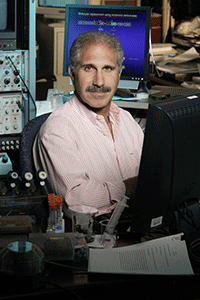

- Robert C. Malenka, M.D., Ph.D., Stanford University School of Medicine; BBRF Scientific Council; 2010 BBRF Goldman-Rakic Prize; 2007 BBRF Distinguished Investigator; 1992, 1990 BBRF Young Investigator
- Neir Eshel, M.D., Ph.D., Stanford University School of Medicine; 2023, 2020 BBRF Young Investigator
Drs. Malenka, Eshel, Boris D. Heifets and colleagues provided evidence explaining why the amphetamine-like psychotropic compound MDMA at low doses has reduced abuse potential compared with other amphetamines, and why it and a variant form called R-MDMA appear to generate pro-social effects, which are potentially useful in treating PTSD, depression, and other illnesses. Read more.
Molecular Psychiatry, July 24, 2025
A Way to Repair a “Leaky” Blood-Brain Barrier (BBB) is Tested
Basic Research; Next-Generation Therapies: Schizophrenia, Autism, Neurodevelopmental Disorders, ADHD, Depression, Anxiety

- Stewart A. Anderson, M.D., University of Pennsylvania Perelman School of Medicine; BBRF Scientific Council; 2016 BBRF Independent Investigator; 2002, 1995 BBRF Young Investigator; 1999 BBRF Freedman Prize
Researchers tested a way to potentially repair the integrity of the blood-brain barrier (BBB), the protective membrane that separates the brain from the bloodstream. Leaks in the BBB have been linked with neurodevelopmental illnesses including schizophrenia and autism, as well as stress-related depression and anxiety. In experiments using stem cell-based technology the team found that mitochondria, the cellular energy “factories,” are dysfunctional in the BBB in a genetic illness called 22qDS syndrome, associated with intellectual disability, autism, and ADHD—but also, possibly, in other disorders in which BBB integrity is impaired. When treated with the FDA-approved drug bezafibrate, stem cell-derived human BBB cells showed improved mitochondrial generation of ATP and reduced BBB “leakiness.” Read more.
The research team included Adam J. Rossano, M.D., Ph.D, 2023 BBRF Young Investigator.
Science Translational Medicine, August 20, 2025
New Research Underlines the Importance of Recognizing Mood Instability Between ‘Major Episodes’ in Bipolar Disorder
Diagnostic Tools/Early Intervention: Bipolar Disorder

- Sarah H. Sperry, Ph.D., University of Michigan; 2022 BBRF Young Investigator
New research underlines the importance of “mood instability” occurring between major mood episodes in bipolar disorder. 481 patients followed over 5 years fell into three distinct mood instability subgroups, “high,” “moderate,” and “low,” each predicting future clinical and functional outcomes. Over 78% were in the high or moderate groups, suggesting mood instability is a non-trivial factor in understanding the patient experience. The study confirms and extends preliminary findings reported last year. High mood instability correlated with the most severe outcomes in year 6. Compared with those in the low instability class, those in the high instability class had worse family and work functioning, poorer mental health functioning, and higher suicidal ideation in year 6. The team argues for implementing patient-reported mood assessment measures which could potentially reveal significant—and treatable—mood instability between major episodes. Read more.
The research team also included Melvin G. McInnis, M.D., 1999 BBRF Independent Investigator, 1992 BBRF Young Investigator; and Ivy F. Tso, Ph.D., 2018 BBRF Young Investigator.
Nature Mental Health, September 22, 2025
Smartphone Sensors + ChatGPT Successfully Tracked & Predicted Symptoms in Adolescents with Anhedonia
Diagnostic Tools/Early Intervention: Depression, Anxiety. Childhood Mental Health

- Christian Webb, Ph.D., McLean Hospital / Harvard Medical School; 2018, 2015 BBRF Young Investigator
While smartphones can passively collect rich behavioral data (with users’ consent) by tracking patterns of movement and activity, and while Large Language Model (LLM)-based tools like ChatGPT can analyze text with impressive accuracy, it is unclear whether they can provide insight into the emotional or motivational aspects of an individual user’s behavior. This question was addressed in a pilot study examining the two technologies in the context of a talk therapy called behavioral activation (BA), which aims to reduce the classic depression symptom of anhedonia by targeting patterns of avoidance and withdrawal and by increasing engagement with rewarding activities. The team recruited 38 adolescents, ages 13–18, to receive 12 weekly hour-long individual BA therapy sessions targeting their anhedonia. A subset of 13 participants also contributed passive smartphone data, collected continuously via built-in accelerometer and GPS sensors. Every other week during treatment all participants completed a “burst” of realtime assessments (“ecological momentary assessments”) over 5 consecutive days via 2-3 surveys delivered each day via a smartphone app and analyzed by ChatGPT. The researchers concluded that LLM-based assessments can indeed provide “clinically relevant insights based on language generated outside the therapy room, offering scalable and unobtrusive ways to monitor therapeutic processes in patients’ daily lives” even as in-person therapy is being delivered. Read more.
The research team also included: Diego A. Pizzagalli, Ph.D., 2017 BBRF Distinguished Investigator, 2008 BBRF Independent Investigator; and Erika E. Forbes, Ph.D., 2014 BBRF Independent Investigator, 2006 BBRF Young Investigator.
NPP—Digital Psychiatry and Neuroscience, October 13, 2025
Deep-Brain Stimulation Guided by Brain Mapping Resulted in Rapid & Acute Reduction in Severe OCD Symptoms in Trial Patient
Next-Generation Therapies: Obsessive-Compulsive Disorder (OCD)


- Andrew Moses Lee, M.D., Ph.D., University of California, San Francisco; 2020 BBRF Young Investigator
- Andrew D. Krystal, M.D., University of California, San Francisco; 1997, 1993 BBRF Young Investigator
A research team developed and tested in a first patient a novel protocol designed to identify optimal personalized brain stimulation targets for severe, treatment-resistant OCD. Once identified, the team used these targets to guide precise implantation of a deep-brain stimulation (DBS) device whose subsequent activation resulted in rapid and acute reduction of the patient’s OCD symptoms (62% lower 6 months after the procedure). Both the mapping of brain targets via implanted electrodes and insertion of the DBS device were invasive procedures involving brain surgery; but the targets identified in this highly treatment-resistant patient, if they are replicated in other such patients, may also prove useful in targeting noninvasive brain stimulation therapies such as TMS. Read more.
The research team included: Joline M. Fan, M.D., 2022 BBRF Young Investigator.
Translational Psychiatry, October 31, 2025
