



Study Reveals How High-Impact Autism Mutations Alter the Way Proteins Interact, Driving Neurodevelopmental Pathology & Pointing to New Therapeutic Targets
Study Reveals How High-Impact Autism Mutations Alter the Way Proteins Interact, Driving Neurodevelopmental Pathology & Pointing to New Therapeutic Targets
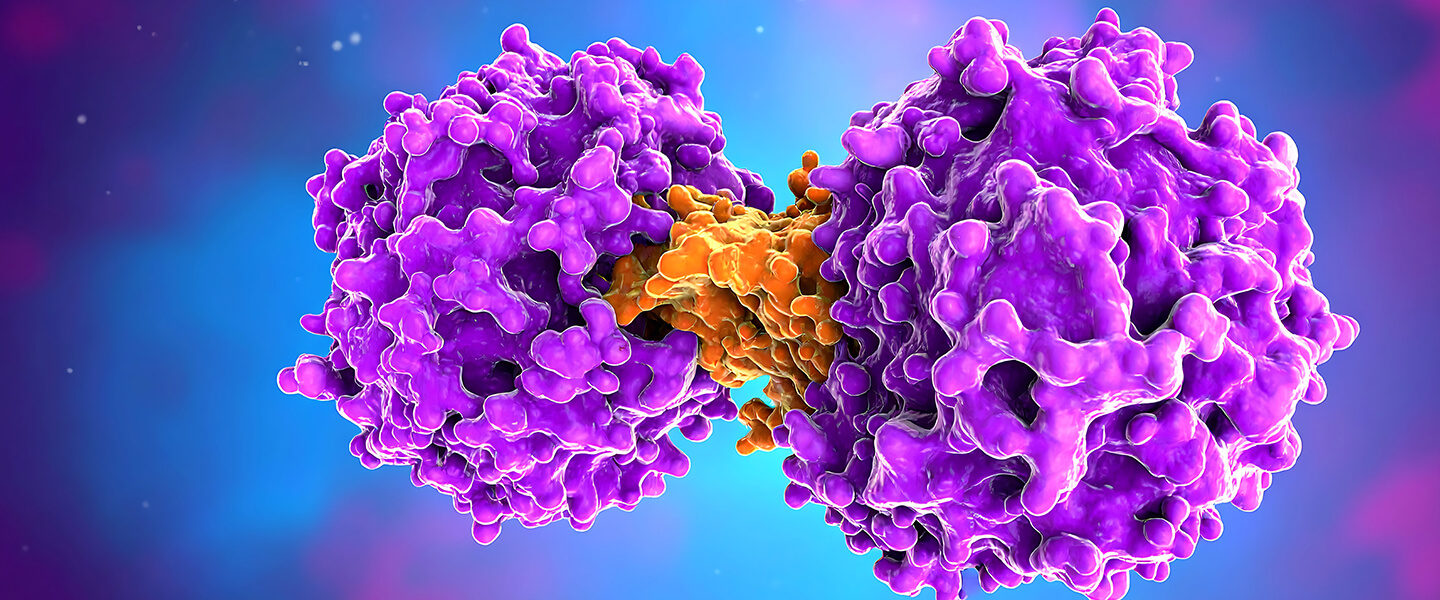

In important new research, researchers have added new kinds of knowledge to our understanding of how severe gene mutations that have the power to cause autism spectrum disorder (ASD) alter cell biology in the developing brain and perturb brain development.
The study, co-led by BBRF Scientific Council member Matthew W. State, M.D., Ph.D., focuses not on autism “risk-genes” themselves—which have been identified in previous studies—but rather on how the proteins that those genes encode interact with one another and with other key proteins, and in several specific cases, how these interactions alter normal brain biology and drive neurodevelopmental pathology.
Dr. State, of the University of California, San Francisco, is a child psychiatrist and among the leading experts worldwide in human genetics and its role in neurodevelopmental disorders. In a paper in the journal Science, he and colleagues point out that over the last 15 years, genome-sequencing studies have identified over 250 different genes (among the ~21,000 in the human genome) in which catastrophic mutations or other forms of DNA variation have large, deleterious effects on developmental biology. Although they occur only rarely, and often in families with no prior autism history, these “high-confidence/large effect" genes play a disproportionate role: when mutated, they are thought to be causal factors in severe autism, which encompasses an estimated 30% of all ASD cases.
As these “causal” genes were first being discovered, years back, it was reasonable for researchers to hope that their identification would directly lead to experiments in animal models of ASD that might not only replicate aspects of the human disorder, but lead to the testing of candidate drugs to reverse their harmful impacts in the brain and body. But as Dr. State was recently quoted in The New York Times, “there’s a huge missing step. What these genes are doing is they are building proteins that are driving the biology of the cell.” The new study focuses on these proteins and their impacts.
Along with Dr State, co-leaders of the new research included Drs. Nevan J. Krogan, A. Jeremy Willsey, Kirsten Obernier, and Tomasz J. Nowakowski, a 2018 BBRF Young Investigator. Among the paper’s co-first authors was Belinda Wang, M.D., Ph.D., a 2026 BBRF Young Investigator.
Proteins not only are the “stuff” of all the structures in the body, including the brain; they are also the workhorses: genes are constantly instructing cells to manufacture specific proteins to perform specific tasks. In some proteins, faults caused by genetic variations do not harm human health. But the proteins that are encoded by the 250 or more “high-confidence/large effect" risk genes for ASD tend to be very important, if not essential: their malfunction, alone, is thought to have the power to cause the disorder or greatly increase its likelihood. The question, as Dr. State’s comment suggests, is precisely how these impacts are produced.
The new research sought to examine validated high-impact ASD risk genes at the level of interactions among proteins—“protein-protein interactions,” or PPI. Do ASD-associated gene mutations “rewrite” or disrupt these protein interactions—rather than simply render the gene non-functional and incapable of generating any functional protein at all? The hope was that such analysis might shed light on specific pathologies, and perhaps even reveal convergent or shared biological pathways that translate the “risk” in the gene mutations into mechanisms shared across multiple risk genes. The implication of such convergence would be a kind of streamlining: the potential to develop therapeutics that would ameliorate shared pathology caused by multiple genes, rather than having to target separate pathologies arising from each gene.
Testing this hypothesis called for creating systematic, large-scale disorder-relevant maps that would trace large sets of protein-protein interactions involving ASD-related high-impact risk genes. Such maps would have to take into account the ways the proteins for these genes interact under normal conditions, and also how these interactions are perturbed, and with what impact, when the risk genes are in fact mutated.
By mapping 100 high-confidence ASD genes, the team uncovered over 1,800 related protein-protein interactions, most of them never previously noted. They were able to show that proteins interacting with the 100 ASD risk genes “form a highly interconnected network that recapitulates ASD-relevant risk-gene expression patterns in the developing human brain.” Put another way, the researchers were able to identify a network of proteins that the 100 autism-related genes interacted with, making it possible to look at how specific interactions contribute to pathology underlying autism.
The ASD-related mutations were found to induce a “rewiring” of protein-protein interactions, forming patterns that converge. By comparing protein interaction patterns in the normal genetic case vs. when mutant, high-impact ASD risk genes are involved, the team noted recurrent alterations in protein behavior in the ASD case, with some proteins gaining new functions they ordinarily don’t have, and in other cases losing functions they normally have. These changes affected, for instance, the way proteins either adhered or failed to adhere to one another, in “complexes,” which can affect their ability to perform vital tasks or functions.
In some cases, such alterations in the way proteins behave or interact can have pathological consequences pertinent to ASD. One example involves a protein called FOXP1, encoded by a gene of the same name—one of the high-impact ASD risk genes. In normal circumstances, the FOXP1 protein interacts with another partner called FOXP4. Both of these proteins (“transcription factors”) bind to DNA and regulate other genes. Multiple variants in the FOXP1 gene were found to affect the physical interfaces that normally enable the two proteins to associate. FOXP4 is centrally involved in the generation of new excitatory (glutamatergic) neurons, in the cortex. Altered cortical neurogenesis has been seen in cortical organoids derived from stem cells that have been engineered to carry genetic variants found in ASD patients. Together, these findings reveal that certain ASD-linked genetic mutations weaken the FOXP1 protein’s physical interaction with the FOXP4 protein, leading to premature maturation of cortical neurons and altered neural activity.
This is an example of how an alteration of protein interactions caused by mutations in ASD risk genes results in biological changes that can drive developmental defects. It also suggests how such new information can inform novel therapeutic approaches. When the FOXP4 gene was deleted in situations in which FOXP1 was mutated, neurodevelopmental defects in model mice did not occur. In the human setting, it will not be a matter of deleting the gene, but rather modifying, perhaps with a drug, the pattern of protein interactions that the FOXP1 gene mutation disturbs.
The study thus provides a way to identify shared molecular vulnerabilities across different genetic mutations affecting neurodevelopment. The team envisions the platform they have tested in this work with helping to prioritize “druggable protein interfaces and pathways, offering a rational foundation for precision therapies aimed at restoring neurodevelopmental trajectories and circuit-level function in ASD.” They also propose their approach “as a blueprint for mechanistic drug discovery” in other neurological and psychiatric disorders, an idea that can now be explored in future research.
