



Possible Neural Signatures of Future Depression & Anxiety Onset in High-Risk Adolescents’ Resting-State Brain Scans
Possible Neural Signatures of Future Depression & Anxiety Onset in High-Risk Adolescents’ Resting-State Brain Scans
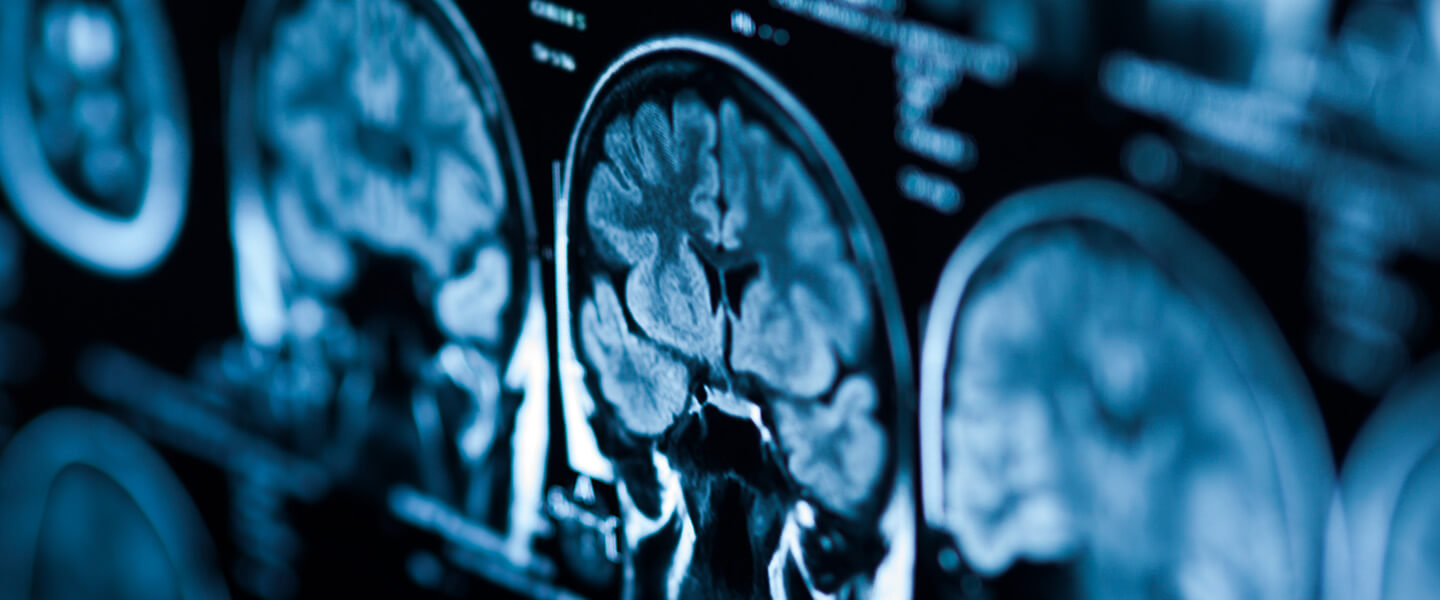

A research team co-led by a BBRF Young Investigator has reported results of an imaging-based study designed to identify potential biomarkers predicting the onset of internalizing disorders in adolescents at high-risk for such disorders based on family history.
Internalizing disorders are those like depression and anxiety whose symptoms are directed inward. They are contrasted with externalizing disorders such as conduct disorder in which symptoms are directed outward.
Rates of internalizing disorders have been documented to increase sharply during adolescence, with an estimated 12% of all adolescents experiencing symptoms within any 12-month period. Having an initial episode of, for example, major depression at a young age can leave one vulnerable to future episodes, and in some cases the development of chronic, treatment-resistant illness.
As noted by the team conducting the new study, having a family history of internalizing disorders, especially in one’s own parents, is among the most potent risk factors of depression and anxiety. Youths with a family history are estimated to be 2 to 4 times more likely to themselves develop depression or anxiety compared to youths without a family history. And transmission, where it occurs, is not disorder-specific, the team notes: parental depression can raise risk in the child of depression, anxiety, as well as substance-use disorders and even suicide.
Daniel C. Kopala-Sibley, Ph.D., of the Hotchkiss Brain Institute and the Mathison Centre for Mental Health Research and Education at the University of Calgary, Canada, has used funding from two BBRF Young Investigator grants, in 2022 and 2017, to support his research on risk factors disposing young people, including those at high risk, to develop depression and other internalizing disorders.
In the current study, the analysis focuses on changes in resting-state functional connectivity in parts of the brain heavily implicated in the processing of emotions, rewards, as well as salience (judging the importance of perceptions and sensory data). These brain areas are collectively referred to as “subcortical,” as they lie beneath the cortex in the brain’s interior, and involve structures of the limbic system such as the amygdala, hippocampus, basal ganglia, and thalamus. They also involve the striatum, a subcortical area encompassing the putamen, caudate, and nucleus accumbens, which are involved in voluntary motor control, reward-based learning, habit formation, and cognitive functions like decision-making.
Among much other data, “a recent systematic review found that youth with depression may display either hyperconnectivity or hypoconnectivity of frontal, visual, auditory, and parietal brain regions to the amygdala, anterior cingulate cortex, and striatum,” the team noted in its paper, which appeared in the journal Neuroimage: Reports. The paper’s first author was McKinley Pawlak.
Prior studies have specifically implicated the resting-state functional connectivity (RSFC) of subcortical limbic and striatal areas in depression and anxiety. RSFC is a measure of activity in the brain when an individual is not performing a specific cognitive task. But, the researchers note, the evidence gathered to date is hard to interpret. Some have found increased and others decreased RSFC in various brain regions and subregions. It is also unclear whether alterations in RSFC are involved in the causation of internalizing disorders or whether they are a result of them. Still another issue in interpreting prior RSFC results is that very little of this research has been conducted in high-risk youth.
The new study was based on data from the preexisting Calgary Biopsychosocial Risk for Adolescent Internalizing Disorders (C-BRAID) study. It includes only young people, ages 11-17, with a family history of depression or anxiety but who had not, themselves, experienced a clinically significant episode when the study began. At this “baseline” point, participants received an RSFC brain scan, while they and a parent completed well-validated structured diagnostic interviews (the Mini-International Neuropsychiatric Interview [MINI] for parents, and MINI-Kid for youth). Youths also completed the Youth Self-Report, to assess internalizing symptoms that may have existed prior to developing a clinically significant internalizing disorder. The MINI-Kid survey was repeated at 9- and 18-month follow-ups to assess for onset of an internalizing disorder.
The cohort initially consisted of 145 young people: 57% female, 68% Caucasian, with a mean age of 13 and a half, from households, on average, with parents college educated or above and with a median income between $75,000 and $100,000. A variety of circumstances led to a winnowing, with the final cohort consisting of 93 youths with high-quality brain scan data and complete diagnostic assessments at the two follow-ups.
Analysis of the brain scans focused on individual differences among the young people in the study—differences in functional connectivity within and between various brain regions: the bilateral caudate, pallidum, putamen, nucleus accumbens, amygdala, hippocampus, and thalamus. A comparison was made: baseline RSFC scans of the adolescent subjects who did not develop an internalizing disorder at the 9- and 18-month follow-up points vs. baseline RSFC scans of those who did go on to develop an internalizing disorder. (At the 9-month point, 3 youths had developed depression and 5 an anxiety disorder; at the 18-month point, a total of 13 youths had developed depression and 9 an anxiety disorder.)
The most significant finding was that youths who developed a first-onset of depression or anxiety at follow-up differed in their “baseline” RSFC scan compared with youths who did not. The difference was seen in baseline resting-state functional connectivity of subcortical striatal and limbic regions. A mixture of over- and under-connectivity to parietal and visual areas was noted in the affected youths relative to those who did not experience the onset of an internalizing disorder.
At the very least then, it was possible for the team to suggest that “altered striatal connectivity with parietal and visual regions may be a pre-morbid marker” for onset of such disorders—in other words, a biomarker, detectable, at least in these youths, prior to the onset of any symptoms. Importantly, this observed relationship held up even after the team compensated statistically for the impacts of age, sex, and any preexisting internalizing symptoms.
Although a number of different explanations can be offered for the observed results, it was the team’s view that altered resting-state functional connectivity “in regions involved in reward and attention-shifting” might be ones to focus on in trying to predict the development of internalizing disorders, specifically in high-risk young people.
“Increased connectivity of striatal regions to areas involved in attention-shifting and emotional regulation could indicate compensatory mechanisms for rumination, anhedonia, and emotional dysregulation prior to disorder onset,” the researchers said. Rumination refers to a habit of repeatedly going over past mistakes and negative thoughts; anhedonia is the inability to experience pleasure. Both are frequent symptoms of depression and anxiety disorders.
If validated in larger cohorts of subjects as well as in young people who are not considered to be at elevated risk for internalizing disorders, the team said, the results of this study could help inform targets for behavioral therapy as well as for therapeutic brain stimulation methods such as rTMS.
