


The Gut-Brain Axis and Psychosis

Tuesday, January 20, 2026, 2:00 pm EST
The Gut-Brain Axis and Psychosis

The newest frontier in psychiatry is understanding how the healthy bacteria and other microorganisms that normally reside in the human gut ("the microbiome") protect against inflammation in the body and the brain. Inflammation of the brain's memory structure, the hippocampus, is well associated with psychosis. Lifestyle choices and health conditions can alter the composition of the gut microbiome, especially diet, which we found can impact the hippocampus. Diet has implications for understanding the origins of severe mental disorders, with improved diet presenting novel pathways to treat disorders. This talk concerns the gut and oral microbiome and diet, and also describes circulating inflammatory molecules and the autonomic nervous system, which link the gut to the brain.

Please use #BBRFWebinar when sharing or posting about our Meet the Scientist Webinars on social media.

Sign up for other upcoming webinars.

View past webinar recordings.

Presented by 
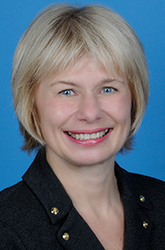
Dolores Malaspina, M.D., M.S., MSPH

Director, Psychosis Program

Icahn School of Medicine at Mount Sinai

2007 Distinguished Investigator Grant

2001 Independent Investigator Grant

1995, 1993 Young Investigator Grant


Dr. Dolores Malaspina is Professor of Psychiatry and Pharmacology in the Mount Sinai Medical Schools Institute for translational medicine.

She trained in psychiatry and launched her career at Columbia University and New York State Psychiatric Institute, becoming the director of Clinical Neurobiology and launching the “Schizophrenia Research Unit” (SRU) and high-risk program with Cheryl Corcoran (COPE) before becoming chairman of Psychiatry at New York University and the Bellevue Hospital Center. She founded and directed the multidisciplinary “Institute for Social and Psychiatric Initiatives” (InSPIRES) to study the heterogeneous underpinnings of psychosis and train beginning investigators before joining Mount Sinai as the Director of Psychosis Research and treatment.

Her education in environmental biology (Boston U), zoology (Rutgers U) and epidemiology ( Columbia U), along with medical, psychiatry and research training established the framework for her research approach which spans persons, populations, animal models.

She has made novel contributions to psychiatry. She first proposed and demonstrated large effects of advancing paternal age on the risk for schizophrenia, now recognized as the source of rare gene variants in genetic architecture.

Her work on the gut-brain-axis and hippocampal inflammation was the first NIMH grant funded for microbiome research in mental illness and will be discussed.

In addition her group is examining the underpinnings of late onset schizophrenia and worsening depression in menopausal women in another NIMH grant to Julie Spicer, her prior mentee. She has had continuous NIMH funding for 35 years, published 500 papers and received awards for research, clinical care and mentoring.

Moderated by
Jeffrey Borenstein, M.D.
Brain & Behavior Research Foundation
 

Jeffrey Borenstein, M.D., serves as the President & CEO of the Brain & Behavior Research Foundation, the largest private funder of mental health research grants. Dr. Borenstein developed the Emmy-nominated public television program “Healthy Minds,” and serves as host and executive producer of the series. The program, broadcast nationwide, is available online, and focuses on topics in psychiatry in order to educate the public, reduce stigma and offer a message of hope. Dr. Borenstein served as Editor-in-Chief of Psychiatric News, the newspaper of the American Psychiatric Association from 2012 - 2023.

Dr. Borenstein is a Fellow of the New York Academy of Medicine and serves as the Chair of the Section of Psychiatry at the Academy. He also has served as the President of the New York State Psychiatric Association. Dr. Borenstein earned his undergraduate degree at Harvard and his medical degree at New York University.