



Wearable Activity Sensors + AI May Help to Distinguish Adolescent Bipolar Disorder From ADHD and Other Disorders
Wearable Activity Sensors + AI May Help to Distinguish Adolescent Bipolar Disorder From ADHD and Other Disorders


Bipolar disorder (BD) can be difficult to diagnose. Patients must experience at least one major depressive episode and at least one manic or hypomanic episode before a diagnosis can be confirmed. (Mania is characterized by significantly elevated and/or irritable mood as well as notably increased energy and activity; hypomania is a less intense version, but with equally important mental health implications).
When an initial depressive episode precedes an initial manic/hypomanic one, it is impossible with current diagnostic tools to predict at that point that a given individual will or will not at some future time experience a manic or hypomanic episode. A diagnosis of major depressive disorder can be made, but not a BD diagnosis. In some depressed people, a subsequent manic episode will occur, making a BD diagnosis possible. But even then, it is possible to confuse symptoms of other psychiatric conditions for changes in energy and activity that also occur in mania/hypomania. In ADHD, for example, hyperactivity can in some cases be mistaken for mania/hypomania. In view of this, a person with depressive symptoms and hyperactivity could conceivably have unipolar depression (e.g., major depressive disorder) and co-occurring ADHD—or, perhaps, bipolar disorder without ADHD.
Distinguishing people with overlapping symptoms involving both depressive mood and significantly elevated levels of energy and activity can result in delays of positive diagnosis (whether for BD or other disorders) that can be measured, in some cases, in years. Misdiagnosis or a long time lag before a correct diagnosis is made can translate into missed opportunities for matching the patient with the therapies most likely to help them, which in turn can lead to less satisfactory long-term outcomes.
Researchers at the University of Pittsburgh are among those who have been working to discover objective markers—biological and/or behavioral—that might enable doctors to predict at an early stage that an individual has BD or one or more other disorders, or BD and one or more other disorders.
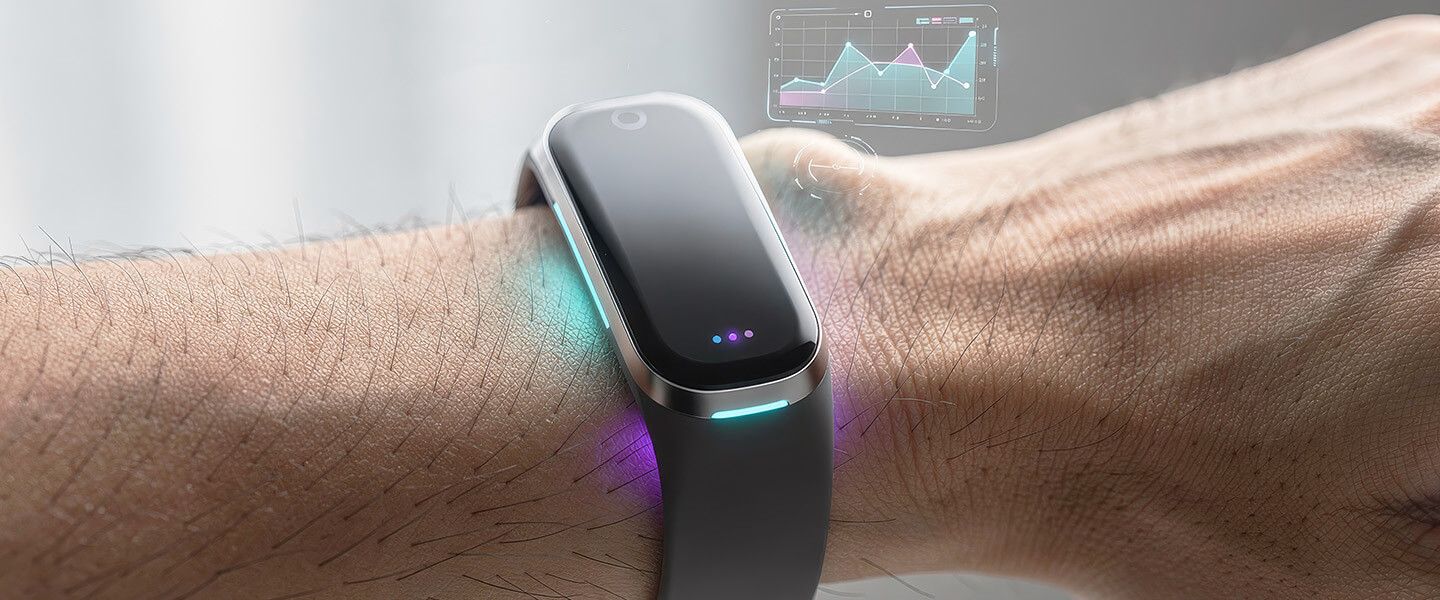
Rasim S. Diler M.D., and Michele A. Bertocci, Ph.D., a 2019 BBRF Young Investigator, led a team that also included Boris Birmaher, M.D., 2022 BBRF Ruane Prize winner and 2013 BBRF Colvin Prize winner, in utilizing actigraphy and artificial intelligence (AI) to test models that might be used in the clinic to help differentiate BD in adolescents from other conditions. Actigraphy is an objective method of measuring an individual’s rest and activity cycles, via a device worn on the wrist that contains a digital accelerometer akin to those incorporated into smartphones and sleep- and exercise-monitoring devices.
Actigraphy has helped other researchers better understand disturbances in daily circadian rhythms in BD patients. The new study uses the technology to examine the relationships between daily activity and BD, excluding nightly periods of sleep. This focus on daily activity follows in part from past research showing that in adults, a decrease in daily activity has been seen in patients experiencing a depressive episode, relative to activity in manic/hypomanic episodes.
Dr. Birmaher, the Endowed Chair in Early Onset Bipolar Disease and a Distinguished Professor of Psychiatry at the University of Pittsburgh School of Medicine, is among those who have contributed to establishing definitions for measures of daily activity in BD as well as energy increases characteristic of mania/hypomania. These have been incorporated into the DSM manual used by psychiatrists to make diagnoses. Among the current guidelines, the mania requirement for a BD diagnosis requires 4 hours or more of “energy upswing” (not necessarily in a row) each day for four consecutive days. The authors of the new study note that while differences in daily activity levels are known to occur in BD, specific activity patterns have not yet been identified which might help distinguish BD from ADHD and other psychiatric diagnoses.
To discover such patterns, the team studied data from 389 adolescents, average age 15, who had been admitted to the specialized Child and Adolescent Bipolar Spectrum Services unit in Pittsburgh’s Western Psychiatric Hospital. The cohort studied included patients with BD but not ADHD (61); BD with ADHD (86); ADHD without BD (115); and a variety of other psychiatric disorders (127). All of these youths were inpatients at the time of data collection, and each had at least 4 days of actigraphy data.
Two AI programs were used to search for patterns in data that for each participant was broken down into non-overlapping hour-long periods during the day (between 7 am and 8 pm) characterized by comparative levels of activity. This yielded analytical units that registered intervals of minimum and maximum activity throughout the day. These 60-minute intervals were regarded by team as “objective markers of clinical self-reports of elevated and reduced daily activity levels.” They aligned with DSM diagnostic thresholds such as the 4-hour daily criterion for elevated activity associated with hypo/mania. “To assess extreme fluctuations in daily activity, we also calculated the difference in maximum and minimum 60-minute duration activity.” In addition to activity features from actigraphy, patient age and sex were included as input features in the AI models to account for potential age/sex-related variations in activity patterns and demographic differences often observed in psychiatric disorder diagnoses.
A large set of what computer modelers call “features” was built into the algorithms used by the two AI programs to train themselves to parse the data and discover useful patterns. Both AI programs were highly effective in this task, with one proving, for this cohort, slightly more effective than the other. With an accuracy of 90% or more, both programs used data on individual maximum and minimum daily activity along with age to classify the four diagnostic subsets within the total cohort.
“Actigraphy data, collected during inpatient stays,” succeeded in “differentiating between difficult-to-distinguish psychopathologies of BD without ADHD, BD with ADHD, ADHD without BD, and other illnesses,” the team reported in Psychiatry Research Communications.
“Each diagnostic group [in the cohort] shows behavioral trends toward elevations and reductions in daily activity differently,” they noted. For example, “the predictive power of the variables we employed aligns with clinical observations that BD is characterized by heightened energy variability and abrupt daily shifts in motor activity.”
The team suggested that its findings, if replicated and extended, “strongly support” using actigraphy to provide objective and quantifiable measures to assess inpatient activity and classify diagnoses. This, they said, “can complement clinical observations, especially by identifying subtle differences in activity patterns that may not be visually apparent.”
With specific reference to BD, they said “leveraging AI and wearable technology to analyze physical activity may enhance research precision and aid in developing personalized care plans.”
