



Researchers Map the Prefrontal Cortex in a New Way That Focuses on How It Actually Functions
Researchers Map the Prefrontal Cortex in a New Way That Focuses on How It Actually Functions
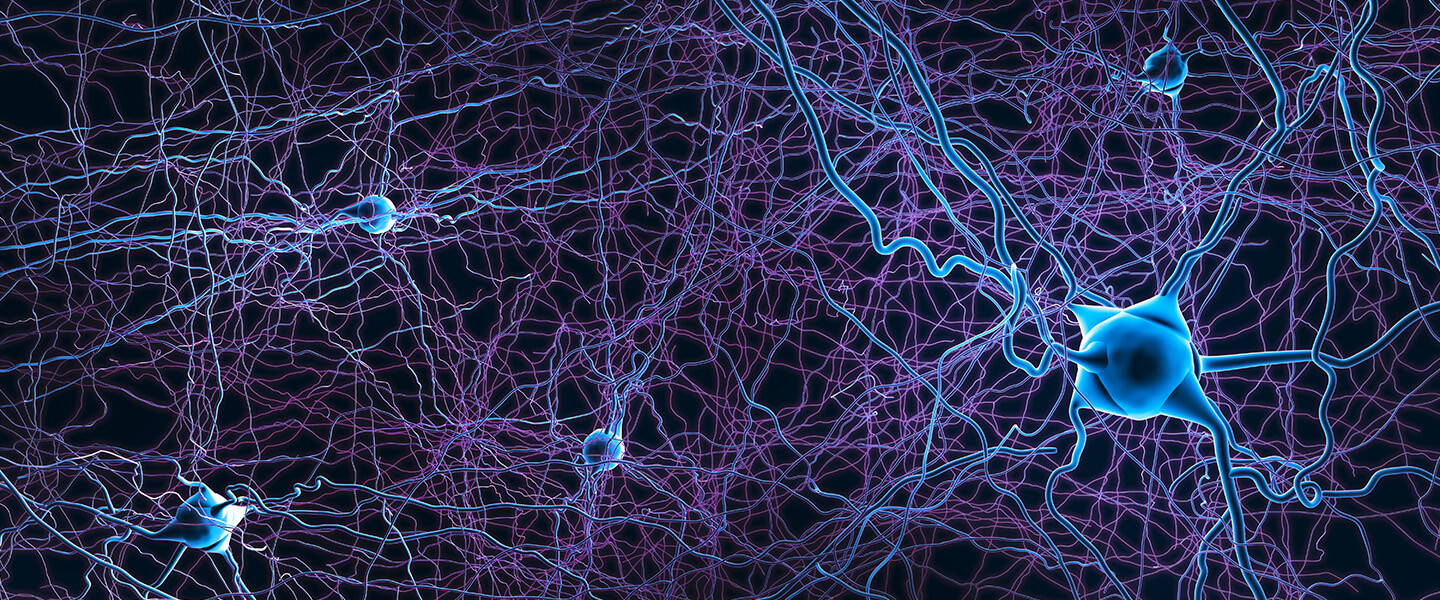


In their efforts to understand the causes of psychiatric illnesses and to develop ways of effectively treating them, researchers need to understand both how the healthy brain is structured and accomplishes its many functions, as well as how elements of brain structure and function are perturbed when someone has a psychiatric disorder—for example, symptoms of schizophrenia or major depression or bipolar disorder.
Both aspects of this quest for knowledge—about healthy brain function and departures from the healthy state in different disorders—are among the most difficult tasks any branch of science has ever undertaken.
An historically important approach to understanding how the brain works has roots tracing back more than a century. In 1906, a Spaniard named Ramón y Cajal co-won a Nobel Prize for his epochal discoveries made via microscopy about the individual cells called neurons that populate the brain and communicate across tiny gaps called synapses. Observations of brain structure made by Cajal and many others in subsequent years led to physical maps, suggesting an architecture in which different brain regions, distinguished by their distinctive structures and neuronal types, were linked, at least in theory, with particular functions.
A new paper appearing in Nature Neuroscience written by a team led by a BBRF grantee offers a distinctly different way of understanding how the brain works. The researchers attempt to understand the functional organization of the prefrontal cortex (PFC)—the brain region that integrates brain-wide information and is responsible for planning, decision-making and other advanced cognitive functions—not on the basis of “cytoarchitecture,” or how brain tissue looks in a microscope and is mapped in atlases, but rather in terms of neuronal firing patterns (in this case, within the PFC and between the PFC and other brain regions).
Team leader Marie Carlén, Ph.D., of Sweden’s Karolinska Institute, a 2010 and 2008 BBRF Young Investigator, described one implicit rationale for the new research: “Considering that deviations in prefrontal cortex function have been linked to virtually all psychiatric disorders, it is surprising how little is known about how this region actually works.” Pierre Le Merre, Ph.D., a 2019 BBRF Young Investigator, and Dr. Katharina Heining were co-first authors of the new paper.
In its paper, the team specified: “It is unclear to what extent subregions of the PFC hold functional specializations, and the existing structural descriptions of the PFC are yet to be integrated with the neuronal activities underlying this region’s information processing.” A neuron’s firing pattern, they noted, reflects “intrinsic biophysical properties and the neuron’s embedding in a particular network. The activity profile of neurons should, therefore, inform about the functional properties of brain regions.”
In their study, the researchers sought to find a correlation between single-neuron activity and cortical hierarchy, i.e., how information is routed and defined by connectivity. To do this, Dr. Carlén explains, “one identifies in what cortical layer a particular neuron sits, and to what layer its axon projects.” Certain patterns, she says, are thought to reflect a place high up in the hierarchy (here, neurons are giving feedback to the target region/layer they are connected to), while other connectivity patterns are associated with lower rungs in the information hierarchy (here, neurons are more simply relaying information to connected regions).
Dr. Carlén and colleagues recorded the activity and mapped the exact anatomical 3D locations of over 24,000 individual neurons in the brains of awake mice (over 12,600 of the neurons were within the PFC) to create the first high-resolution activity-based PFC maps. The neurons’ spontaneous activity and their response to auditory tones were analyzed, as well as the firing of PFC neurons during cognition-related activities.
The activity patterns revealed did not align, functionally, with traditional, tissue-based maps of the PFC. “Our findings challenge the traditional way of defining brain regions and have major implications for understanding brain organization overall,” Dr. Carlén said.
The activity pattern of the recorded neurons was found to reflect the hierarchy of information flow within the cortex, overall, as well as within the PFC itself. Neurons with slow, regular activity proved to be typical of the PFC, which sits at the top of the brain’s information-flow hierarchy. Slow and regular neuronal firing is associated with the function of integrating disparate sources of information—integration that makes possible higher cognitive functions like planning or reasoning.
But the team was surprised to also find that spontaneous, high-rate firing by groups of PFC neurons were enriched in PFC areas supporting decision-making.
Taken together, the results indicate functional specialization of neurons within the PFC; also, that activity modules and functional properties are distributed across multiple PFC subregions, suggesting that intrinsic connectivity plays a more critical role than physical layout in shaping PFC function.
In Dr. Carlén’s view, the results “suggest that cognitive processes rely on local [intra-PFC] collaboration between neurons whose activity patterns complement one another. Some neurons appear to specialize in integrating information streams, while others have high spontaneous activity that supports quick and flexible encoding of information—for instance, information needed to make a specific decision.”
The team said that its approach might be used in other brain areas, “providing a scalable roadmap to explore functional organization in diverse brain regions and species,” and therefore could open the way “to obtaining an integrated view of [brain] activity, structure, and function.”
