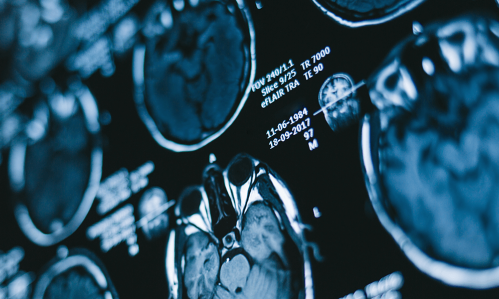

Jonathan Mill, Ph.D., 2009 NARSAD Young Investigator Grantee and colleagues have demonstrated that potentially reversible epigenetic changes play a key role in mental illness. 'Our findings suggest that it is not only...
You are here
Mental Illnesses ›Bipolar Disorder
Did you know more than 2 million American adults have bipolar disorder?
Bipolar disorder causes dramatic mood swings—from feeling overly “high” and/or irritable to sad and hopeless, and then back again, often with periods of normal mood in between. Severe changes in energy and behavior go along with these episodes. The periods of highs and lows are called episodes of mania and depression. It is often not recognized as an illness, and people may suffer for years before it is properly diagnosed and treated.
The Brain & Behavior Research Foundation will honor 8 extraordinary scientists with Outstanding Research Achievement Prizes for their accomplishments in brain and behavior research in New York City on October 26....
This fall, 18-year-old Owen Whalen will enter the freshman class at Rochester Institute of Technology (RIT) in his home town of Rochester, New York. An outstanding student, he’s been awarded a tuition grant by the school...
The depressive symptoms associated with both disorders can make diagnosis a challenge. Major depressive disorder (MDD) is sometimes called unipolar depression – its characteristic mood points in only one direction, “down...
Bipolar disorder is characterized by cycles of mania and depression. Although the manic state is more dramatic, the depressed state is experienced three times more frequently. A number of medications and modalities are...
Pages
Stories of recovery

Meet our scientists

Ask an Expert
|
To date the Brain & Behavior Research Foundation has provided 468 grants worth $31,315,845 to researchers focused on bipolar disorder and related mental illnesses. |
DONATE NOW |