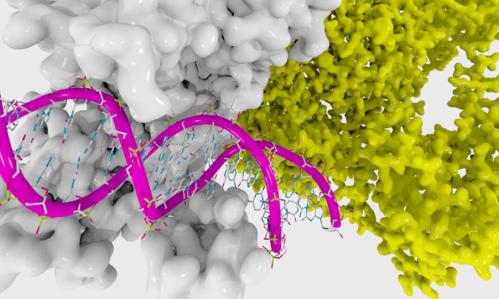

Genome-wide association studies (GWAS), begun in 2005 as a coordinated international effort to search for genes associated with susceptibility for complex diseases, have yielded important findings in virtually every major...
- Mental Illnesses
- Discoveries
- Finding Answers
- Recovery Stories

- NARSAD Grants & Prizes
- Apply for a NARSAD Grant
- Our Scientific Council
- NARSAD Young Investigator Grant
- NARSAD Independent Investigator Grants
- NARSAD Distinguished Investigator Grant
- Klerman & Freedman Prizes
- Outstanding Achievement Prizes
- Productive Lives Awards
- Productive Lives Nomination Form
- Frequently Asked Questions (FAQs)
- Get Involved
You are here
Mental Illnesses ›Schizophrenia
Did you know that schizophrenia affects more than 1 percent of the world's population? See NARSAD Grants at work on the latest schizophrenia research
Schizophrenia is a severe, chronic, and generally disabling brain and behavior disorder. It is most accurately described as a psychosis - a type of illness that causes severe mental disturbances that disrupt normal thoughts, speech, and behavior. Schizophrenia is believed to be caused by a combination of genetic and environmental factors.
Positive symptoms may include delusions, thought disorders, and hallucinations. People with schizophrenia may hear voices other people don't hear, or believe other people are reading their minds, controlling their thoughts, or plotting to harm them. Negative symptoms may include avolition (a lack of desire or motivation to accomplish goals), lack of desire to form social relationships, and blunted affect and emotion. Cognitive symptoms involve problems with attention and memory, especially in planning and organization to achieve a goal. Cognitive deficits are the most disabling for patients trying to lead a normal life.
Visit the Schizophrenia Research Forum, fully sponsored by the Brain & Behavior Research Foundation—a virtual community of scientists collaborating in their quest for causes, improved treatments, and better understanding of schizophrenia.
Stephen Maguire, a doctoral student in mathematics at the University of Illinois at Urbana Champaign, began noticing a while back that sometimes on his way home from class the streets would seem unnaturally empty. A...
Joel E. Kleinman, M.D., Ph.D., the Foundation’s 2011 Lieber Prizewinner for Schizophrenia Research, led groundbreaking research which involved, for the first time, mapping brain development across different stages of life...
Led by Fred H. Gage, Ph.D., investigators are carefully investigating these newly formed brain cells to learn what can go awry in brain development to cause illnesses such as schizophrenia and autism. By recreating these...
A team including NARSAD Grantees at the Yale School of Medicine (Arie Kaffman, MD, PhD; Michael J. Meaney, PhD; and Ronald S. Duman, PhD) have discovered that insufficient neuron development in teens can contribute to...
Pages
Stories of recovery
Meet our scientists

Ask an Expert
|
To date the Brain & Behavior Research Foundation has provided 2,153 grants worth $140,731,742 to researchers focused on schizophrenia and related mental illnesses. |

DONATE NOW |